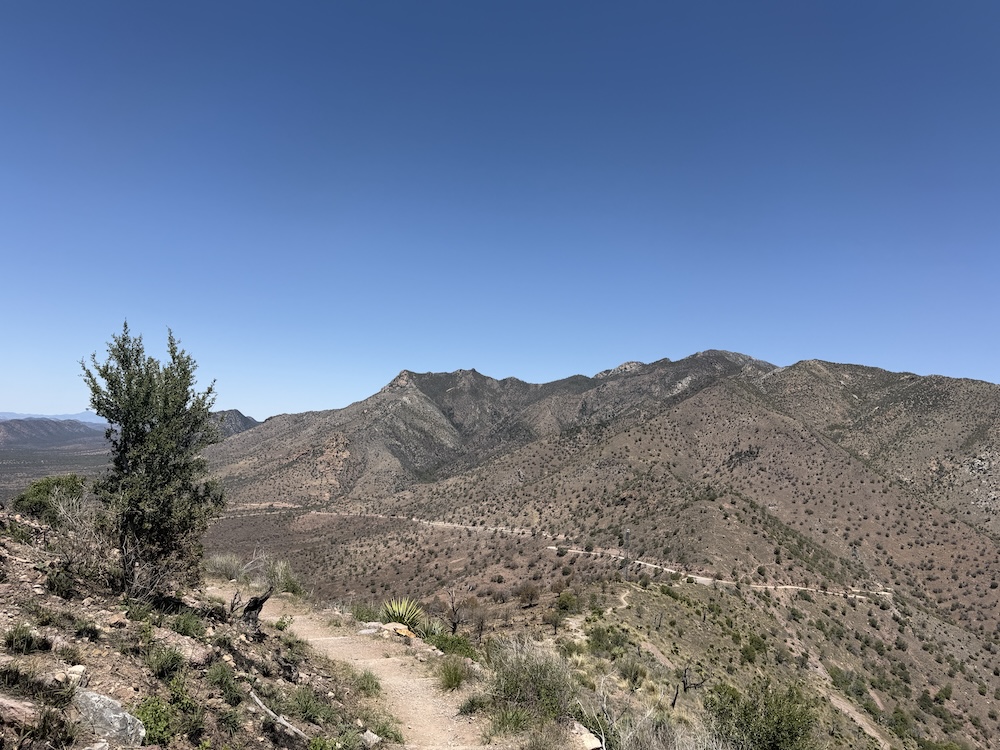
Sky Islands: Coronado National Memorial
Connectivity, Convergence, and Confluence Across the Arizona-Sonora Sky Islands
Summit Trail (Trail System: Sky Islands: Coronado)
September 21, 2026
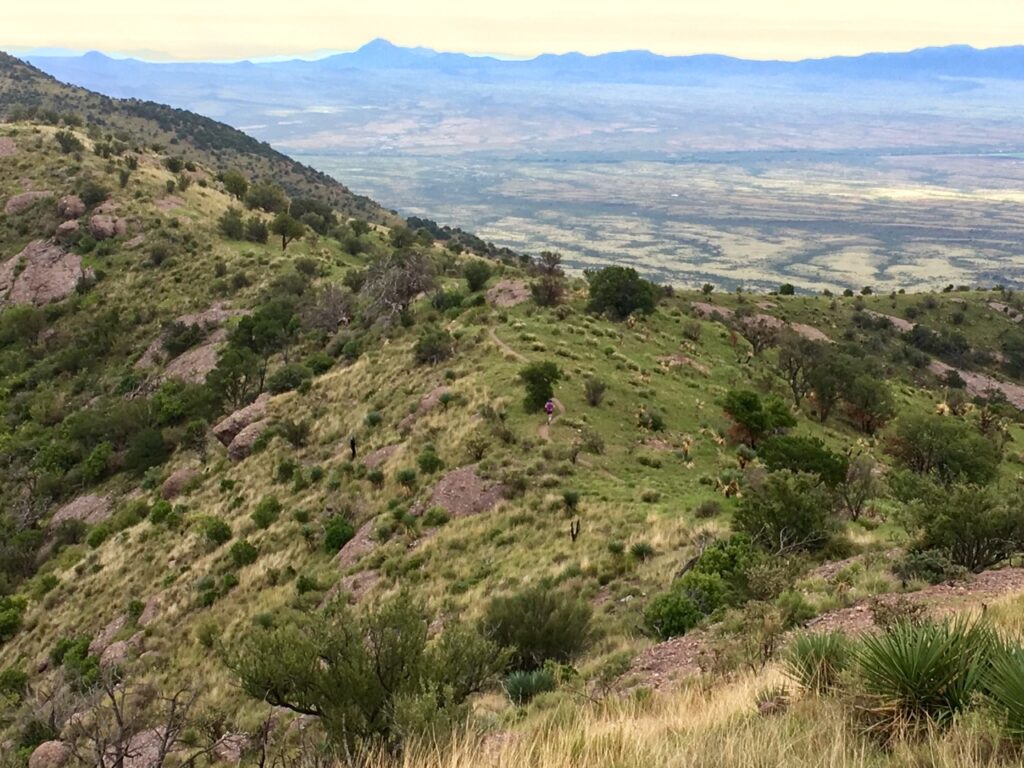
Why start here? Why start this project with Coronado National Memorial?
This place is not large in size and arguably nothing especially great or significant happened here.
Coronado National Memorial (CNM or “Coronado”) is one of the smallest parks proposed as a US-Mexico binational park. In many ways it has been considered the “step-child” of the National Park Service. Yet even this “small” landscape covers a vast, ecologically vibrant, and biodiverse place.
There is no place quite like Coronado.
It is one of the sites with the greatest “seeing power” for the stars in all of the Southwest.
Though its original purpose may have been largely diplomatic and symbolic in nature—the official NPS story ended in the failure of the dream of a binational “Coronado International Memorial” in 1941—Coronado remains a vital place for human, wildlife, and landscape connection, convergence, and connectivity.
Later, a park superintendant remarked:
“Because the Memorial lacks visible remains and is not the site of any dramatic occurrence, its historical value lies in the fact that it is able to set a reflective mood suitable for contemplation of the Coronado Entrada.”
But Coronado was always a place of both human and ecological history. “The land had strong values and amenities for interpreting the historical events and the geography of the area” (Sánchez et al 2001). The story was never just a human one. The flora and fauna of this region are also a large part of this story. And the land.
Argues the charismatic Clinton P. Anderson in 1940:
“I believe it will be a splendid national attraction…All the rest is wilderness looking just as it did when Coronado crossed it 400 years ago. There are very few areas in the United States of which that can be said….I know of no place along the border which serves as well as the lookout point selected by the Park Service.”
This is a place of connectivity of larger landscapes, species, and ecologies and the convergence of science, humanities, and place-based activism rooted in community, ejido systems, and binational conservation that tell much larger stories.
Where is Coronado?
Coronado sits on the boundary of the Santa Cruz and San Pedro watersheds and among an archipelago of isolated yet interconnected Sky Islands (las Islas del Cielo)—a network of isolated desert mountains that rise out of the desert and extend through Arizona, New Mexico, and Sonora. Together this region sits at the crux of one of the most ecologically diverse regions in the Americas. Sky Islands are a vital ecological corridor that connect migratory birds, jaguars, American black bears, and other populations of wildlife in the region. For many species, this region marks the extreme limits of their habitats. Unlikely species meet: North American porcupines and jaguars, American black bears and ocelots. Without landscape connectivity, many populations would remain genetically isolated.


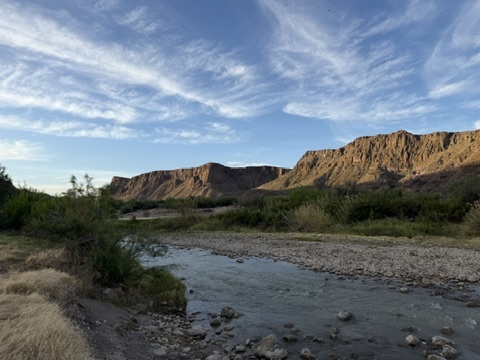

Together, this place offers one of the most awe inspiring views of the entire ecology of the Arizona-Sonora borderlands.
So though this park may be relatively small compared to other national parks, it tells a big story. In many ways, this park remains an unfinished park; it is an unfinished story.
And we are going to tell it (emphasis on the “we”).
Through conflicting, interweaving, connected, ambling stories (many still ongoing and in conflict with one another), multiple voices will speak on the conflicts and connections that arise in shared environments, over public, Indigenous, and private lands, and within human and more-than-human relationships.
Coronado is a borderlands binational park in the making.
Sky Islands: Coronado has the greatest “seeing power” not just of the stars, but of the past, present, and future for what binational parks could mean across the US-Mexico borderlands and the Americas.
Join us as we tell this remarkable story of place, peoples, peaks, movement, connectivity, and ultimately, connection.